
By Brian Lennon
TL;DR: Transfer tooling lets you move an existing die to a new die caster instead of paying for a new one. A good supplier checks machine fit, die construction, and process design, then validates parts before full production.
At General Die Casters, part of the GD Casting Group, we have built new customer relationships by solving die casting problems. This often means another die cast supplier can’t meet quality or delivery requirements. These challenges range from dimensional variability to excessive porosity on critical surfaces.
In most cases, a casting die exists with remaining life. Abandoning the existing tooling and building a new die is an option, but an expensive one. Customers understandably want to fully use their existing assets whenever possible. Transfer tooling works best with a die caster that’s willing and experienced in running existing dies.
Transitioning business from one die caster to another is challenging, but possible. It shouldn’t be a reason to settle for sub-par quality and delivery. Below, General Die Casters breaks down how we evaluate, correct, and validate inherited dies.
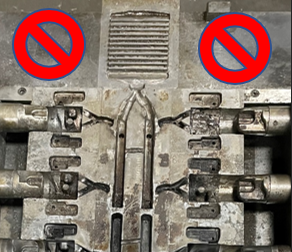
A poorly built die we took over from another supplier.
How Does Transfer Tooling Work?
Moving a die to a new supplier starts with a close review before the die ships. The new die caster checks machine fit, die construction, and process design, then validates parts before full production.
- Confirm the die fits the new supplier’s machine sizes.
- Review models of the die and runner system, or inspect the die in person.
- Run flow simulation to decide if the die runs as is or needs modifications.
- Complete dimensional layouts, capability studies, and PPAP (Production Part Approval Process).
- Gather as much information as possible before the die moves.
Our Experience with Take Over Tooling
We consider take over tooling one of our specialties. Our largest take over project to date was transitioning nearly 30 dies from a major lawn and garden producer. We finished the project in just a few months.
Why Die Casters Miss Quality Requirements
If a supplier can’t meet the customer’s die casting quality requirements, it’s usually for one of a few reasons.
Equipment Capability
Dies are designed for specific size machines based on the surface area of the castings being produced. A die set into a machine that’s too large can damage the casting machine platens and increase cost. A die typically won’t fit into a machine smaller than the one it was designed for. At General Die Casters, we run 600, 800, 850, 900 and 1200 ton casting machines. These are among the most common machine sizes producing castings today.
A die casting machine and its peripheral equipment must be well maintained to consistently produce quality castings. Over time, a machine’s linkage, platens, and hydraulic systems wear and deteriorate. Once these parts are compromised, it becomes very hard to hold the die closed and inject molten aluminum without defects and downtime. We use preventive and condition-based maintenance to keep our equipment ready for production requirements. We also invest capital every year to keep our equipment current.
Lack of Process Controls
Variability exists in all manufacturing processes, and die casting is no exception. A die caster needs the technology to view a shot trace of the filling and intensification stages of the casting process. This graph of pressure and velocity lets the die caster closely analyze the process and the capability of the casting machine. It’s also critical to monitor cycle time, metal temperature, die temperature, and heating and cooling water temperature.
Our Shotscope NX process monitoring system collects this data every cycle. We use it to decide if a casting moves to the next operation or goes back into the furnace. We have data stored for every part produced in the last 25 years.
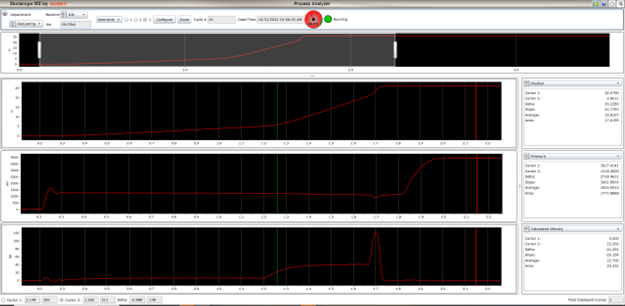
A shot trace shows the pressure and velocity of every shot.
Insufficient Quality Systems
Systems run businesses. An organization can only produce consistent results if it’s systems based, with strong systems behind each critical process. A contract manufacturer also needs the flexibility to handle many customers’ needs. Several of our customers have unique requirements. We won their business not only on quality and delivery, but on our ability to develop custom systems that meet their special demands.
How We Evaluate Die Cast Tooling Design
The design of a die cast die determines the potential quality of a casting. Well-maintained equipment and strong process controls can’t overcome a poorly designed die. If a potential customer can provide models of the die and runner system, we can do a thorough evaluation before the die moves. If models aren’t available, we’ll ask for the die to be delivered to our facility for inspection. We assess the die the same way in either case.
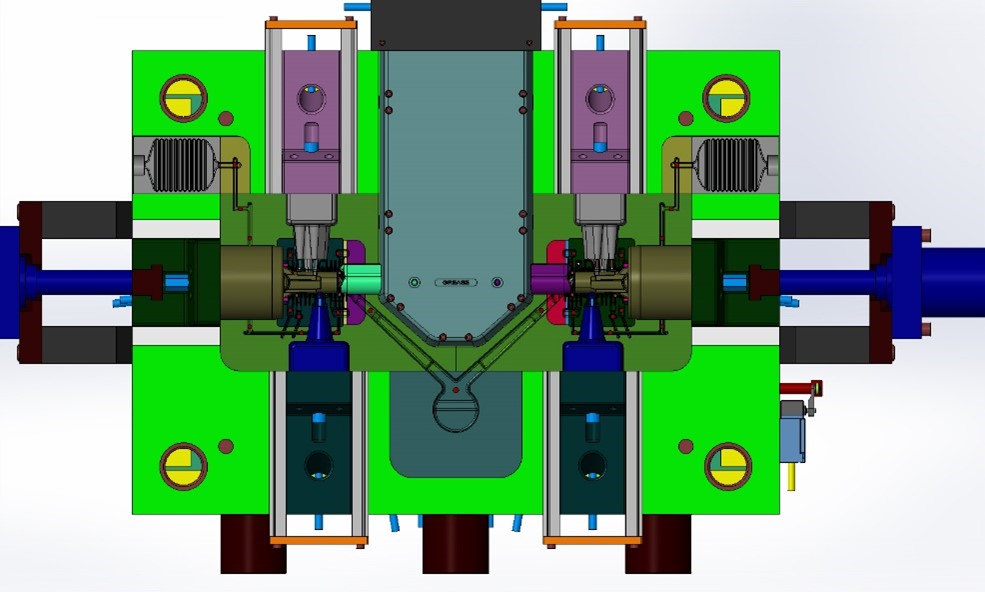
When models are available, we review the die before it moves.
Overall Die Construction
The die must be built to resist distortion from the force of lock up, filling, and intensification. We have received inherited dies built like injection molding dies. These dies have thin holder blocks, inadequate shut-off areas, and delicate slide mechanisms. A high pressure die cast die goes through much higher pressure and temperature cycles and must be built much heavier. In many cases, these dies are dangerous to run in high pressure die casting because molten aluminum can escape from the die. We advise customers to scrap dies built this way.
Process Design
If the die is built to handle the demands of high pressure die casting, we then evaluate the process design. This includes the runner, venting, and cooling systems. NADCA and its predecessor, the Society of Die Casting Engineers, have published books on die design for half a century. The rules of thumb in those books are largely the same ones used today. We’re still puzzled when we inherit a die built with complete disregard for these best practices.
If the design is reasonable and a model is available, we run simulations in Magmasoft. We rely on it to evaluate inherited tooling. Magmasoft shows how likely the current design is to produce acceptable parts. From there, we decide if the die should be sampled as is or modified first. We can also model modifications to find the lowest-cost way to correct the die. Our goal is to find the lowest-cost way to produce castings that meet the customer’s requirements.
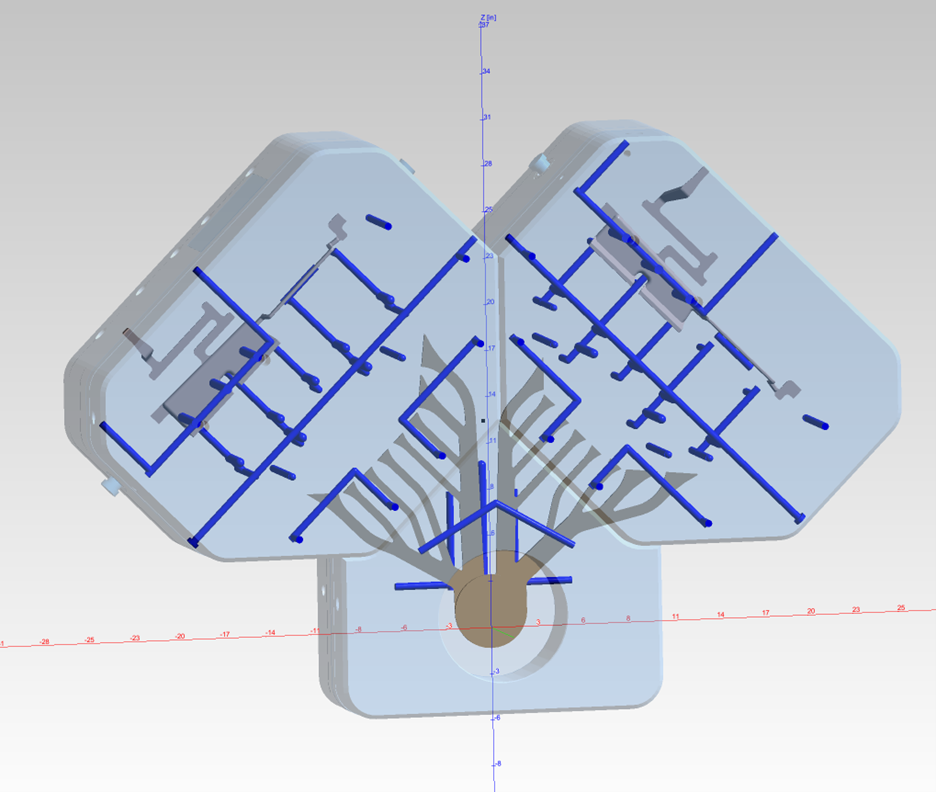
Magmasoft simulation shows how an inherited die is likely to fill before we sample it.
Run As Is, Modify, or Replace?
After the review and simulation, we recommend one of three paths for transfer tooling.
| Option | When it fits | What happens next |
|---|---|---|
| Run as is | Die construction is sound and simulation shows acceptable results. | Sample the die and move to validation. |
| Modify | Die construction is sound, but the runner, venting, or cooling needs work. | Model changes in Magmasoft and make the lowest-cost fix. |
| Replace | Die is built like an injection molding die or is unsafe for high pressure die casting. | Scrap the die and design a new one. |
Modifications made to inherited dies are usually adequate, but not optimal. We work with the customer to fully use existing tooling, with the understanding that we will design a new die or cavities from scratch once its useful life runs out.
Validation
Dimensional layouts and capability studies can be the most time-consuming part of the process. We work closely with the customer to find the critical features of the part that affect fit and function. We often set up an on-site approval process with the customer so production can start while we finalize PPAP. Our experienced quality technicians, along with our 2 Zeiss CMMs and Keyence 3D scanner, let us take on large projects without pulling focus from production.
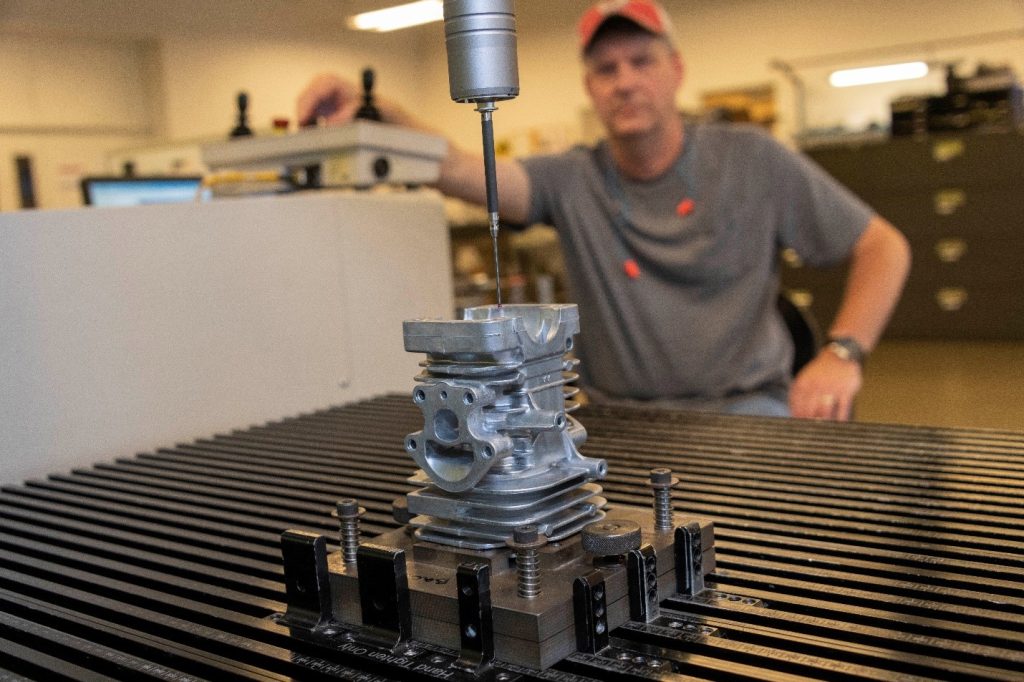
CMM inspection supports dimensional layouts and capability studies on transferred dies.
Machining
Our CNC department is capable and flexible. We use single and twin spindle lathes and horizontal and vertical machining centers with 4th and 5th axis machining. Our equipment can handle almost any machining application. See the full list on our aluminum casting capabilities page.
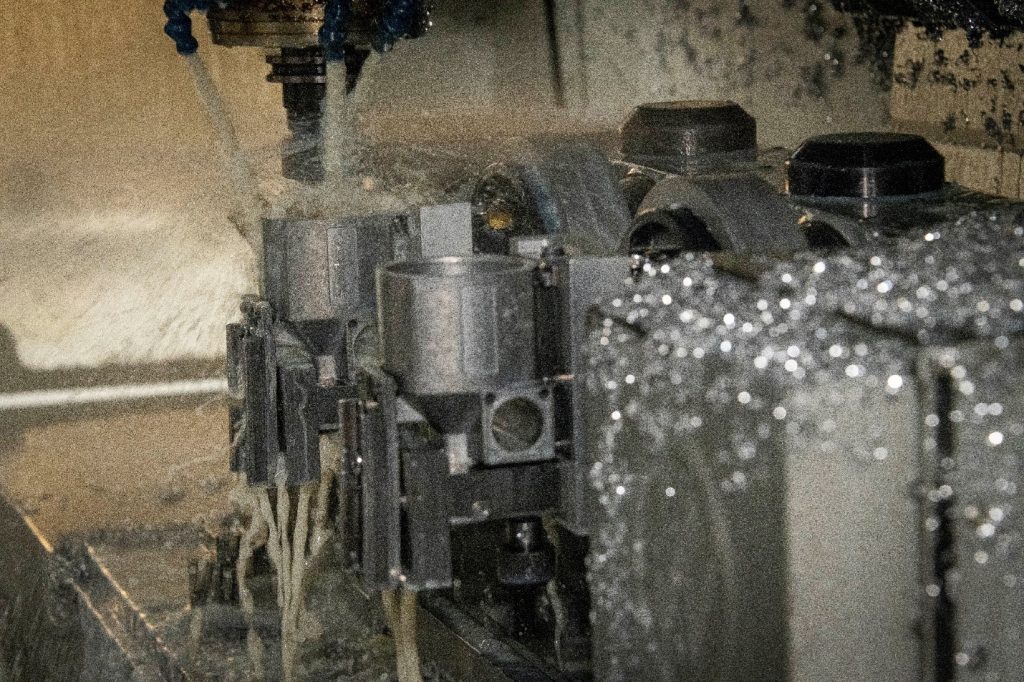
4th and 5th axis machining centers finish die cast parts in-house.
The Timeline
Time is always a factor. Depending on inventory, the customer may only have a few weeks before production lines are at risk. In these situations, it’s critical to get as much information as possible before the die moves. We thrive on these challenges and have met tight deadlines on past transfers.
Partner with General Die Casters on Your Next Die Transfer
If you’ve settled for mediocre quality and delivery, it may be time to consider another option. Running a manufacturing plant isn’t easy. Your die casting supplier shouldn’t be one of your problems.
General Die Casters, part of the GD Casting Group, can review your existing dies and plan the move with you. Talk to our team about moving your dies and improving your casting supply chain.
Frequently Asked Questions About Switching Die Cast Suppliers
What should I gather before moving a die to a new die caster?
Start with 3D models of the die and runner system, the machine size the die ran in, and recent dimensional reports. Shot traces and other process data from your current supplier also help if you can get them. Share your current inventory and the part’s critical features too, so the new supplier can plan validation around your production schedule.
Should I build safety stock before moving a die?
Yes, if you can. The die is out of production while it ships, gets evaluated, and goes through sampling and validation. Extra inventory from your current supplier gives the new die caster time to finish that work without putting your production lines at risk.
Who decides if an inherited die gets modified or replaced?
The customer makes the final call, based on the die caster’s evaluation. The die caster should show you what it found in the die review and simulation, along with the cost of each option. That way you can weigh a lower-cost fix now against a new die later.